Bedding care
How to Wash Organic Linen Sheets Without Excess Wrinkling
Linen’s easy, lived-in beauty is part of its appeal—but a crowded wash, too much detergent, or a forgotten load can leave sheets looking more crumpled than relaxed. A few thoughtful choices help organic linen emerge clean, comfortable, and naturally textured, without chasing a perfectly pressed finish.
Organic linen has a particular kind of elegance: airy, tactile, and at its best when it does not look overly fussed over. The fabric is made from flax fibers, whose natural character gives linen its familiar texture and soft drape. Unlike smooth, tightly finished fabrics, linen tends to crease when it is compressed or left damp in a heap. That is not a flaw; it is part of the material’s relaxed appearance. Still, thoughtful washing and drying can reduce sharp creases and make the bed easier to remake.
The secret is less about a special product or elaborate ritual than about giving the sheets room to move. Use the care label as your authority, choose a suitable gentle cycle, avoid excess detergent, and take the load out promptly. These small habits support effective cleaning while helping preserve the feel and structure of linen over time.
Start with the care label
Before washing, check the instructions attached to your sheets or provided by the maker. Organic linen is not one uniform finish: fiber source, weave, dye, finishing treatments, and construction can all affect the recommended routine. Some sets call for a cold, gentle wash; others may permit a warmer setting. Dryer guidance can vary, too. Follow the specific directions for your bedding rather than assuming every linen item can be treated identically.
Pay attention to details such as whether the manufacturer recommends washing with like colors, using a particular temperature, or ironing while the fabric is slightly damp. If a sheet set includes different pieces, make sure the care instructions apply to all of them. A fitted sheet, flat sheet, and pillowcases are generally washed together when colors and fabric types match, but decorative pieces or other textiles may need separate treatment.
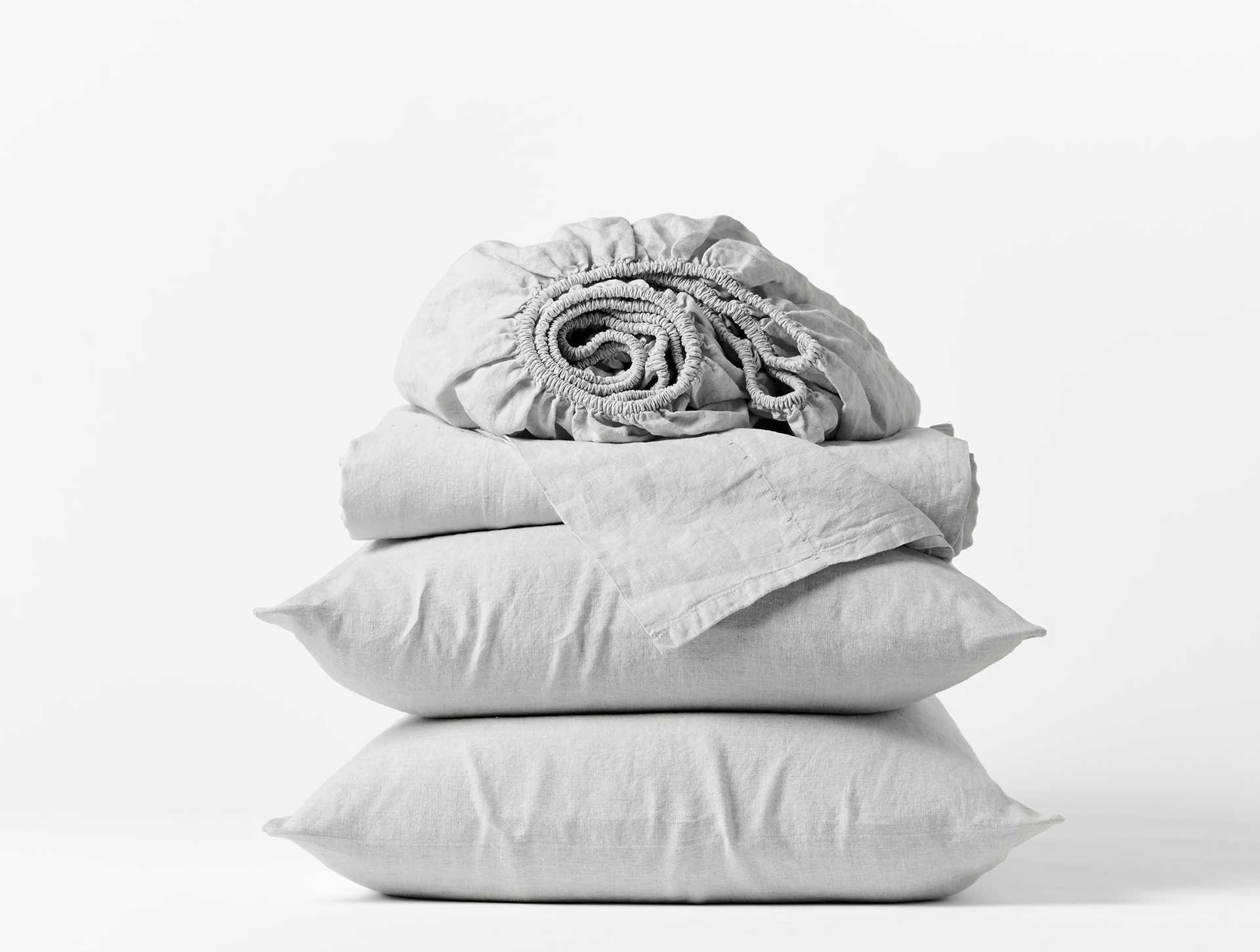
For example, the Organic Relaxed Linen Sheet Set is described as GOTS-certified organic linen, with care instructions recommending a cold gentle cycle with like colors, low tumble drying, and prompt removal. Those details are a useful illustration of why the label matters: even a broadly similar linen fabric may have its own care requirements.
Prepare the sheets before they go in
Unfold each piece before loading the washer. A sheet that goes in tightly bundled may stay folded through much of the cycle, preventing water and detergent from moving evenly across the fabric. Shake out the flat sheet and duvet cover, separate tangled pillowcases, and check corners for small items that may have collected in the bedding.
Close buttons or zippers on other garments if they are being washed in a separate compatible load, and keep abrasive items away from linen. Items with hooks, rough fasteners, or heavy hardware can catch on the weave. For best results, wash bedding with similarly colored, relatively lightweight textiles rather than mixing it with heavy towels or bulky clothing. Different weights can move unevenly in the drum and encourage tangling.
Spot-treat visible marks before washing, using a method appropriate to the stain and fabric. Blot rather than rub, and avoid applying harsh chemicals unless the care instructions allow them. Rubbing can roughen the surface or spread a stain, while an aggressive treatment may affect color. If you are unsure, test a small, inconspicuous area first or consult the maker’s guidance.
Give the load room to move
One of the most common causes of hard-to-manage wrinkles is overcrowding. When the washer is packed too tightly, sheets cannot circulate freely. They may twist into a dense bundle, rinse unevenly, or emerge with deep creases pressed into the fabric. A roomy load allows water and detergent to move through the linen and gives the pieces space to release during the wash.
Wash one sheet set at a time if the machine is small or the bedding is generously sized. A queen or king set can occupy more of the drum than expected, particularly when it includes several pillowcases. The load should be loose enough to shift rather than compressed into a solid mass. There is no universal measurement for a correct load size because washer capacity and sheet dimensions vary, so use the practical test: if the bedding is wedged in, divide it.
Overloading also makes rinsing less reliable. Residual detergent can leave a coating that dulls the hand of the fabric or makes it feel stiff, while compressed folds may hold on to moisture. Both issues can make a sheet set feel less fresh and more difficult to smooth. A smaller, more balanced wash is often gentler than trying to fit every household textile into one cycle.
Choose a mild detergent—and measure it
For routine washing, a mild detergent is usually the sensible starting point. Use the amount indicated for the load size and soil level, taking the detergent’s own directions into account. More soap does not necessarily mean cleaner sheets. Excess detergent may be difficult to rinse away, especially in a tightly packed load or a machine using less water, and residue can make linen feel coated or less supple.
Keep fabric softener out of the routine unless the care label specifically recommends it. Softener can leave a surface deposit on textiles, and it is not essential to linen’s naturally relaxed feel. Similarly, avoid bleach or products containing whitening agents unless the maker’s instructions explicitly permit them. For colored sheets, wash with similar shades and be especially careful about products that may alter color.
Detergent preferences can be personal, but a simple formula is often best: use a product suitable for the fabric, measure rather than pouring by instinct, and do not add several boosters automatically. If the sheets feel slick, stiff, or unusually scented after washing, consider whether too much product was used or whether the load was too large to rinse effectively. Adjusting one variable at a time makes it easier to identify what works for your machine and water conditions.
Select a gentle cycle and appropriate temperature
A gentle or delicate cycle helps limit unnecessary agitation. The aim is to clean the sheets without subjecting them to more mechanical movement than they need. Follow the care label for water temperature; many organic relaxed linen sets specify cold water, while some linen instructions permit a warmer wash. Do not raise the temperature simply to make the sheets feel cleaner unless the maker says it is appropriate.
Like colors should generally be washed together, particularly when sheets are new or richly dyed. Keeping the load consistent in color and weight reduces the chance of transfer and helps the pieces move more evenly. If the care label recommends a specific temperature, cycle, or detergent type, treat that advice as more important than general linen guidance.
It can be tempting to add an extra-long wash or repeated rinse to solve every concern. In most everyday situations, a suitable cycle and a correctly sized load are more useful than adding complexity. If a sheet set is heavily soiled, consult the care instructions and choose a method suitable for the fabric rather than improvising with harsher settings.
Remove sheets promptly after the cycle
Once the wash finishes, take the sheets out as soon as practical. Linen left sitting damp in the drum can settle into deep, closely set creases. It may also develop a stale odor if it remains wet for too long. Prompt removal is one of the simplest and most effective ways to avoid excess wrinkling.
Before drying, gently shake out each item. Untwist the sheets and separate pieces that have wrapped around one another. This quick step loosens folds created in the washer and helps the fabric dry more evenly. If a sheet is heavily tangled, ease it apart instead of pulling hard on the edges or seams.
Then move directly to the drying method recommended by the care label. Do not leave damp linen in a laundry basket while you attend to other tasks. If you cannot dry the load immediately, remove it from the machine and spread or hang the pieces so air can circulate rather than allowing them to remain folded in a heap.
Tumble dry on low and stop before over-drying
When the care instructions permit machine drying, use a low setting and remove the sheets promptly. Lower heat helps avoid the stress associated with excessive drying temperatures, while taking the fabric out before it becomes bone-dry can make the remaining creases easier to relax. Linen often looks best when it retains a little softness and movement instead of being dried until crisp.
Make sure the dryer is not overloaded. Like the washer, it needs room for air to circulate and for the bedding to tumble rather than roll into one heavy bundle. Dry a sheet set separately from bulky towels or other dense items where possible. If your dryer has a timed or moisture-sensing setting, check the load near the end of the cycle and adjust rather than automatically adding a long period of heat.
When the cycle ends, shake the pieces out and fold them loosely, or place them directly on the bed. A brief smoothing with your hands can remove soft folds without pressing every crease flat. For a naturally relaxed finish, this is often enough. If you prefer a neater look, smooth the flat sheet and pillowcases while they are still slightly warm and pliable.
Air-drying for a softer, more natural finish
Air-drying is a useful alternative when the weather, space, and care label allow it. Hang sheets with enough room between them for air to move, and arrange them as evenly as possible. A line or drying rack that supports the fabric broadly can help prevent the weight of a damp sheet from gathering into a narrow, heavy fold. Give the linen a gentle shake before hanging and again when taking it down.
Outdoor air can leave bedding feeling fresh, but direct, intense sun may affect some dyes over time. If color retention is a concern, choose a shaded or well-ventilated location and follow the manufacturer’s advice. Indoors, avoid draping a large wet sheet over a crowded rack where it remains folded against itself; poor airflow can extend drying time and encourage creasing.
Air-dried linen may have a more pronounced texture than linen finished in a dryer, and that is perfectly in keeping with the fabric’s character. If it feels too crisp, a short low-heat tumble—only if permitted by the care label—may soften it. The best result is not necessarily a wrinkle-free surface, but fabric that feels dry, clean, and comfortable.
When to iron—and when to leave the texture alone
Ironing is optional. Linen’s characteristic creases are part of its appeal, and many people prefer a relaxed bed to a sharply pressed one. If you want a smoother finish, check the care instructions and use the recommended iron temperature. A warm iron is commonly suggested for some linen bedding, but the exact guidance can differ by fabric and finish.
Ironing while the fabric is slightly damp can make it easier to smooth, where permitted by the label. Work in manageable sections, move the iron steadily, and pay particular attention to pillowcase cuffs or the visible edge of a flat sheet. You do not need to press every section of bedding to create a composed look; smoothing only the parts that show can preserve the linen’s natural drape while giving the bed a more tailored impression.
If the sheets are already dry, a light mist of water may help with stubborn creases, provided the care instructions allow it. Avoid leaving the iron in one place for too long, and do not use a heat setting chosen for a different fabric. When in doubt, skip ironing and arrange the sheets neatly on the bed. Linen need not be immaculate to look considered.
Common causes of excess wrinkles
- Overloading the washer: Sheets become compressed and tangled instead of moving freely.
- Using too much detergent: Residue may affect the feel of the fabric and make rinsing less effective.
- Leaving sheets in the machine: Damp linen can settle into sharp folds while it waits.
- Over-drying: Extended heat can leave fabric feeling crisp and make wrinkles more noticeable.
- Mixing heavy items with bedding: Towels and bulky pieces can twist around sheets and limit airflow.
- Folding while still damp: Moisture trapped in a fold can create creases and delay thorough drying.
If wrinkles persist, change the routine gradually. First try a smaller load and prompt removal. If the fabric still emerges tangled, separate the sheets from heavier laundry. If it feels coated, review detergent quantity and rinsing. These measured adjustments are more useful than adding unnecessary products or increasing heat.
A simple routine to remember
- Read the care label and separate the sheets by color and fabric type.
- Unfold the bedding and check for stains or items caught in the corners.
- Wash in a roomy load with a mild, properly measured detergent.
- Choose the gentle cycle and temperature specified by the maker.
- Remove the sheets as soon as the cycle ends and shake them out.
- Tumble dry on low or air-dry, following the care instructions.
- Take the linen out before it is over-dried, then smooth, fold, or make the bed.
Frequently asked questions
Should organic linen sheets be washed separately?
Wash them with like colors and compatible fabrics, as the care label directs. A separate load can be helpful when the bedding is bulky, when colors may transfer, or when other items are much heavier. The goal is to give the sheets sufficient space to move and rinse well.
Can I use fabric softener on linen bedding?
Check the manufacturer’s instructions. Fabric softener is not generally necessary for linen, and a buildup of product can affect how fabric feels. A mild detergent, a sensible load size, and appropriate drying are usually the more useful foundations of linen bedding care.
Is it normal for linen sheets to wrinkle?
Yes. Linen naturally creases, particularly when wet, compressed, or folded. The aim of a careful wash is to avoid severe, set-in wrinkles and maintain a comfortable hand—not to remove every sign of the fabric’s texture. A soft, relaxed finish is entirely in keeping with linen.
What should I do if linen sheets come out very creased?
Shake them out immediately and try a low-heat tumble if the care label permits. You can also smooth them while they are slightly damp or use a warm iron if recommended. For the next wash, reduce the load size, avoid excess detergent, and remove the sheets as soon as the cycle is complete.
The quietly considered approach
Good linen care is a matter of thoughtful restraint. Organic linen does not need an elaborate regimen to stay inviting; it needs room in the washer, a gentle approach, and attention at the end of the cycle. Keep detergent measured, respect the care label, and choose low-heat drying or air-drying according to the fabric’s instructions and your preferred finish.
With that simple routine, wrinkles become less a laundry problem than a matter of taste. You can smooth the visible edges, press a cuff if you like, or leave the sheets softly rumpled and ready for rest. The result is bedding that feels cared for without losing the effortless character that makes linen so appealing in the first place.